
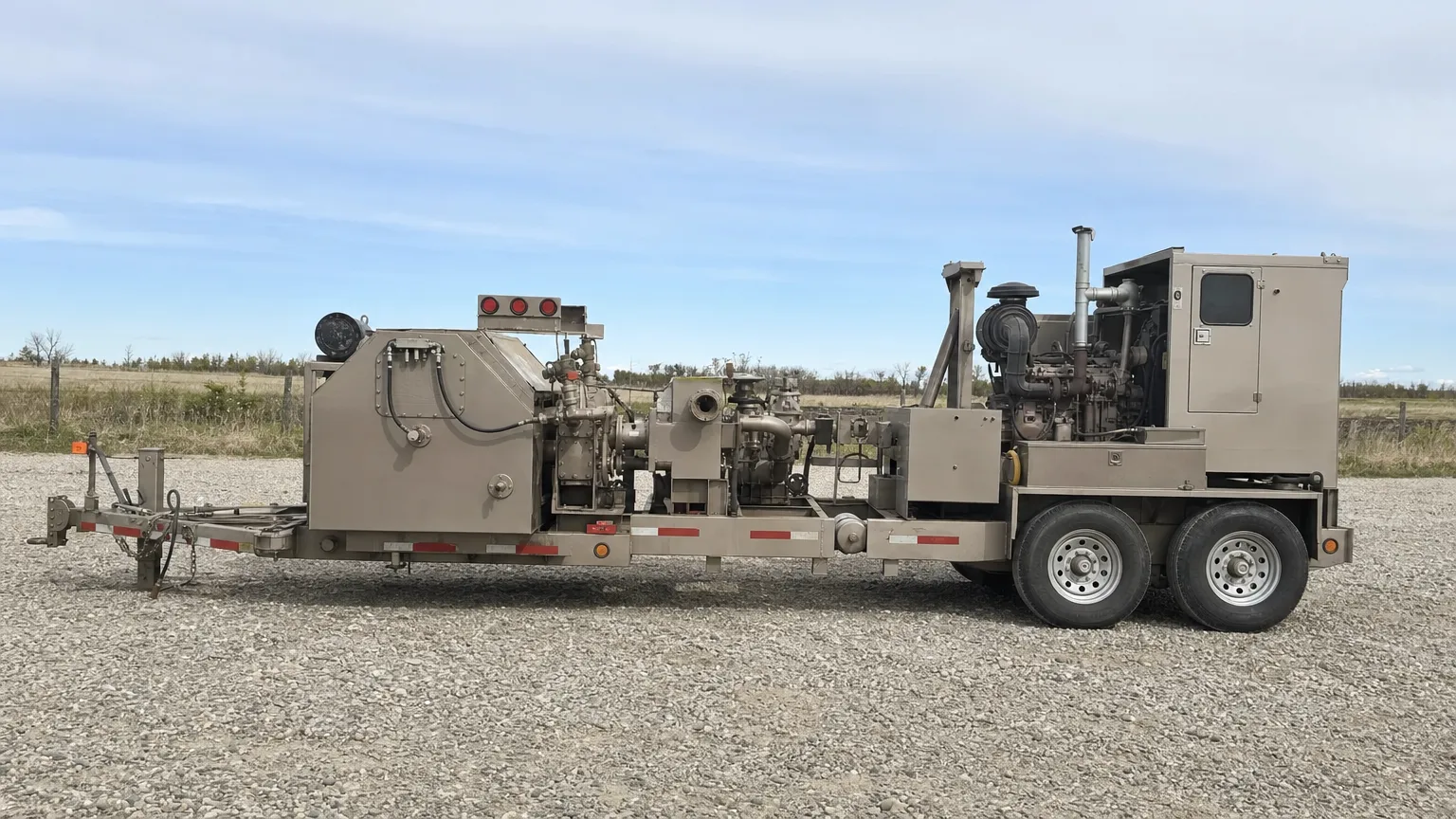
"Pressure pumper" means two different machines, and buyers mix them up. In well servicing it's a pressure truck — a pump, tank and hose reel on a chassis that tests pressure and places fluid. In fracturing it's a frac pumper — a much larger high-horsepower pump trailer that pumps proppant-laden fluid at extreme rates. This article is about the first one. If you came looking for frac spreads, our pressure trucks category isn't it; if you came for the everyday workhorse of the service fleet, read on.
The systems on a pressure truck
Pump end and fluid end
Usually a triplex positive-displacement pump: three plungers in a fluid end with suction and discharge valves. The fluid end is the wear part — plungers, packing, valves and seats — and its size sets the rate; the plunger diameter trades rate for pressure.
Power end and drive
The crankshaft and bearings that turn the plungers, driven from the truck's PTO and transfer case or from a separate deck engine. Oil condition and bearing noise here tell you how the pump has been treated.
Tank and manifold
A compartmented tank — commonly a TC-407 code tank in Canada — with a valve manifold that lets the operator suck from the tank or an external source and discharge through the pump. Baffles, valves and clean plumbing matter as much as the pump.
Hose reel and discharge
A powered reel of high-pressure hose and the discharge iron that connects to the wellhead or line. Hose rating must match the pump's working pressure.
Controls
Pressure and rate instrumentation, relief protection and the operator station. Documented test results come from here.
Standard and high-volume configurations
The same systems, scaled: a high-volume pressure truck runs a bigger fluid end and more tank for high-rate work; a standard unit covers pressure testing and routine well-servicing jobs. Which you need depends on the work — our guide to pressure truck vs fluid pumper vs hot oiler helps place the pressure truck among its cousins.
What this means when you buy
Inspect by system: fluid end, power end, tank and manifold, reel, chassis, paperwork — in that order of cost. Our buyer's checklist lays it out. Every pressure truck we sell or source is inspected the same way at our Calgary yard and shipped to any destination worldwide.