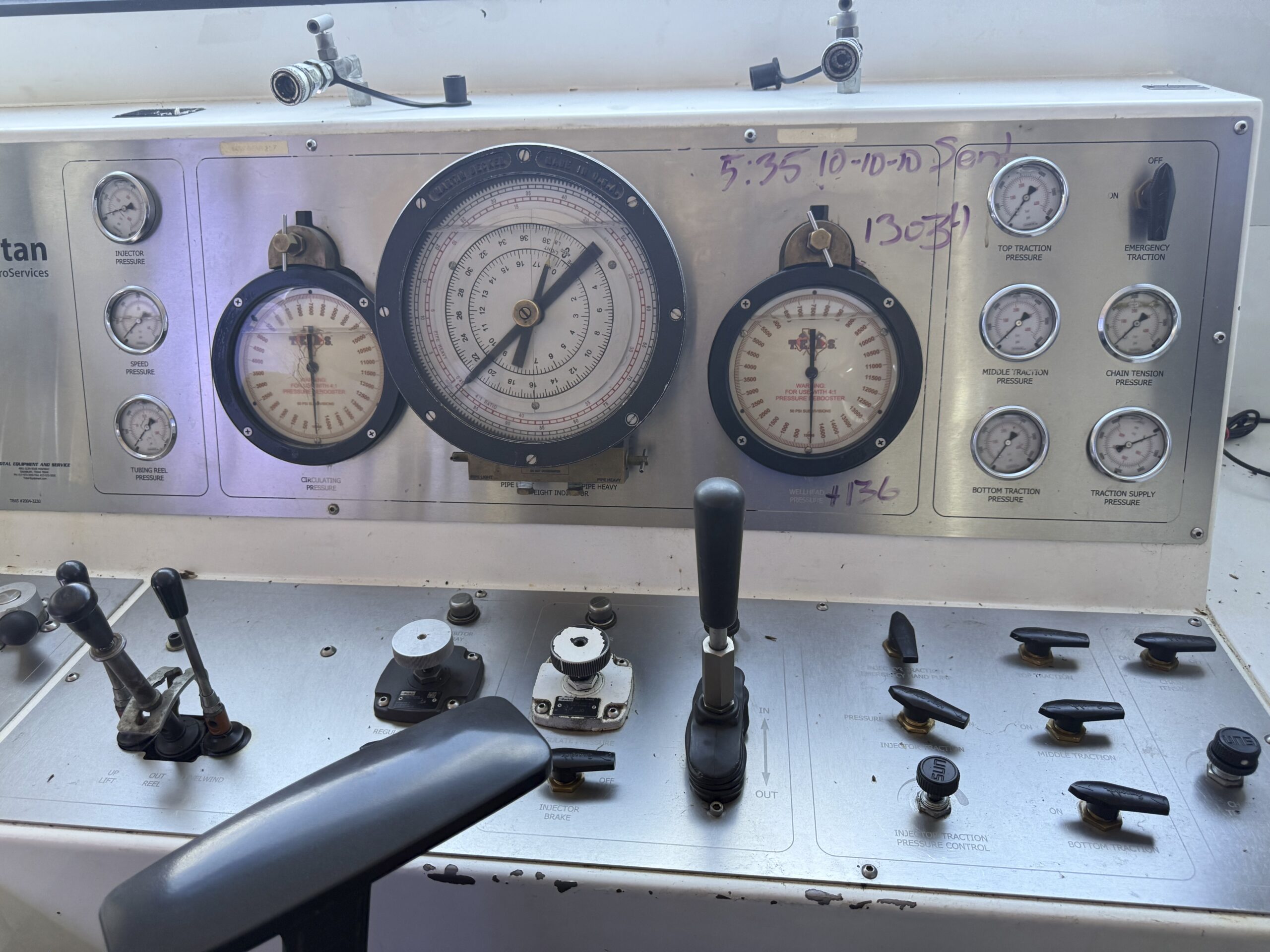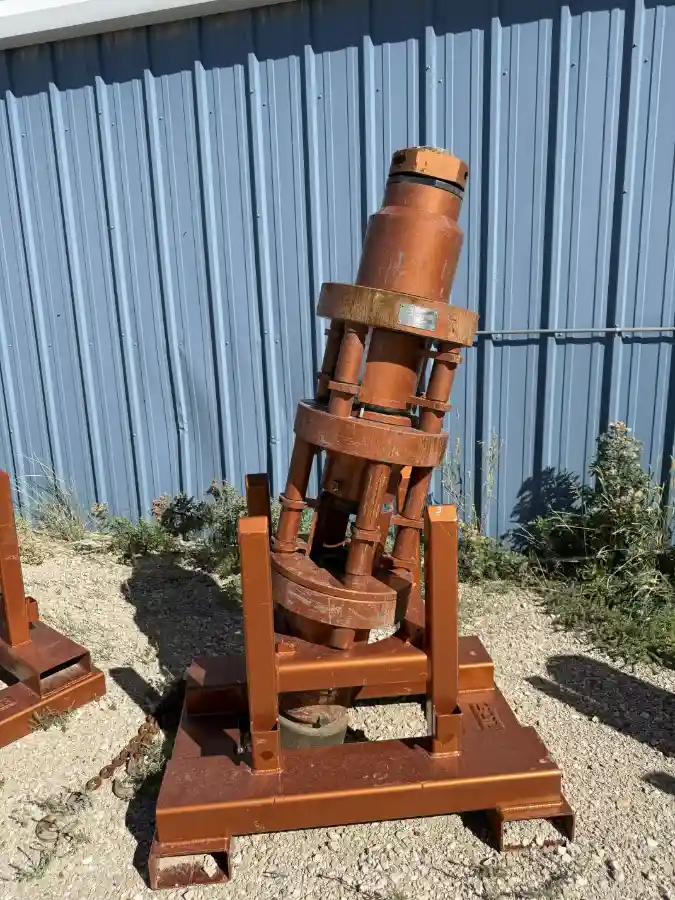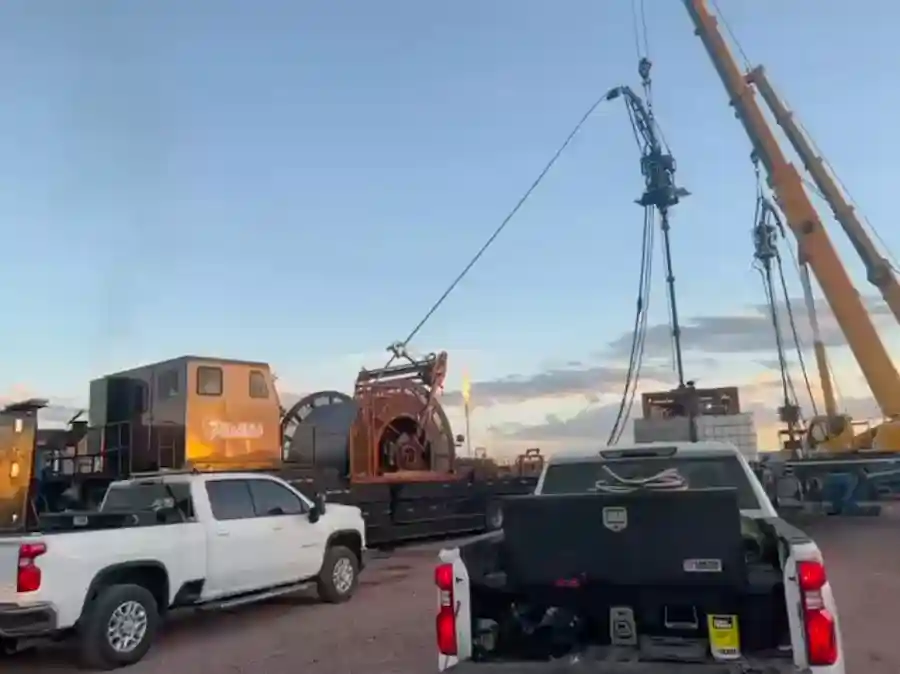
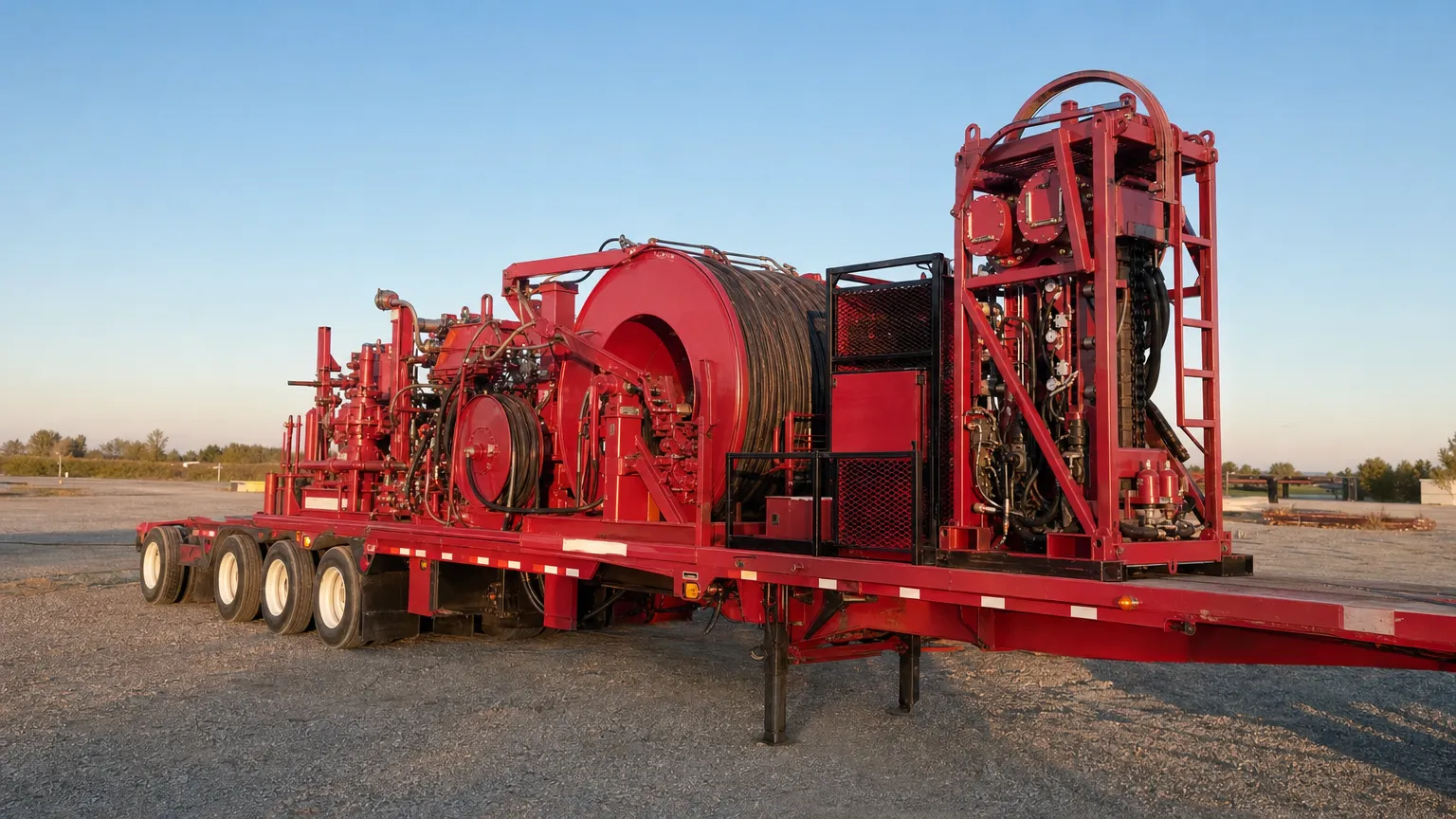
Everything on a coil tubing unit exists to serve the injector head. The reel stores tubing, the power pack makes hydraulic power, the cabin controls it all — but it's the injector that grips the pipe and pushes it into the well against pressure, then pulls it back out. When buyers ask about "100k units" or "HR680 injectors", they're asking about this machine.
How an injector head works
Two counter-rotating chains carry gripper blocks shaped to the tubing diameter. Hydraulic traction cylinders squeeze the chains against the pipe; hydraulic motors drive the chains. Push the chains one way and the tubing goes in — "snubbing" against wellhead pressure when the well is live; drive them the other way and it comes out. On top sits the gooseneck that guides tubing off the reel; below, the stripper that seals around the moving pipe.
Reading the ratings
- Pull capacity — the maximum tubing weight the injector can lift, in pounds. "100k" means 100,000 lb.
- Snub capacity — the force it can push against wellhead pressure, usually about half the pull rating.
- Model numbers — Hydra Rig's HR-series names encode pull in thousands of pounds: HR660 and HR680 class heads sit in the 60k–80k range, the HR6100 at 100k. Other builders use their own conventions; ask for the rated pull, not the name.
- Tubing range — the diameters the gripper blocks are cut for; changing blocks changes the range.
Matching the injector to the job
Depth, tubing size and wall decide the string weight; the string weight plus overpull margin decides the injector. Deep wells and large-diameter coil push you toward 100k class units like the Stewart & Stevenson and Premier HR6100 spreads in our yard; shallower service work runs comfortably on HR660/HR680-class heads.
What to check on a used injector head
Chain stretch and wear, gripper block condition and sizes, traction cylinder leaks, hydraulic motor condition, sprocket and bearing wear, the gooseneck rollers and the stripper's elements and bowl. Ask for the load test records. Injector heads are listed on their own in our coiled tubing category and ship with or without a unit; the buyer's checklist covers the rest of the spread.