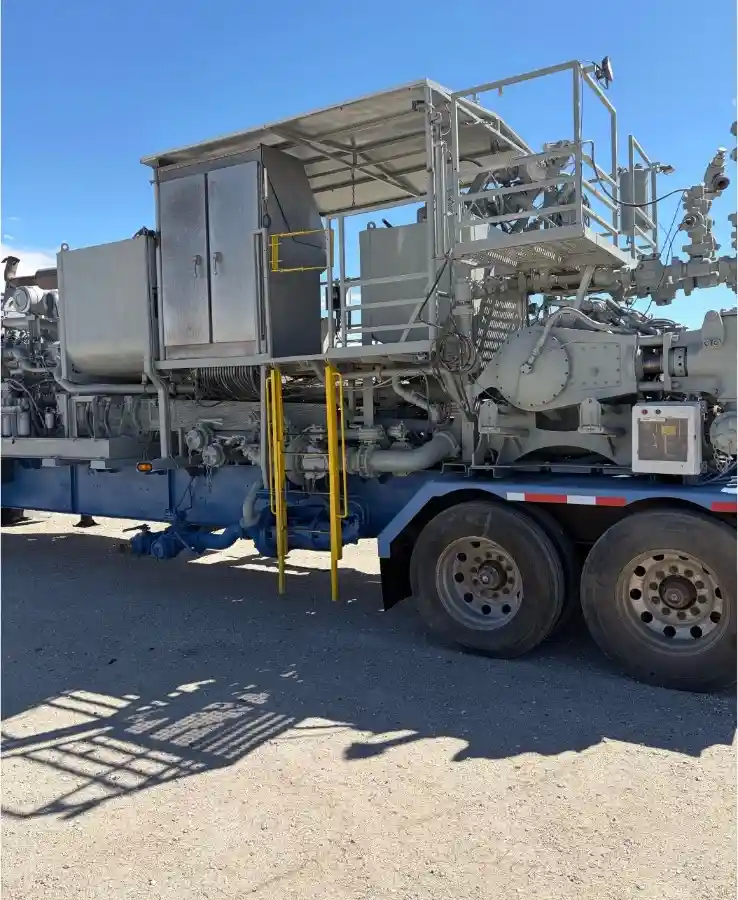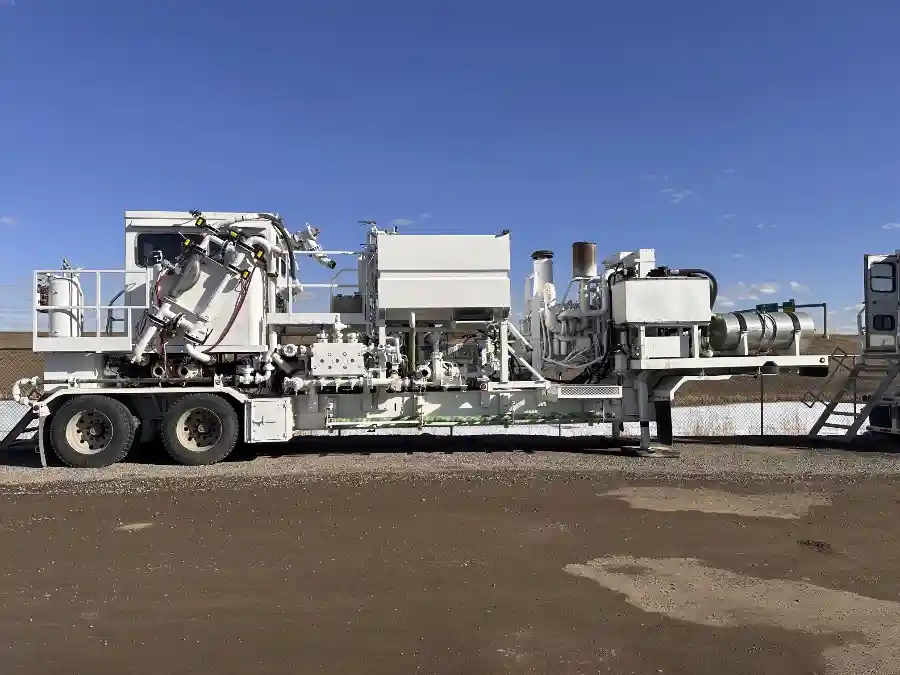
A cementing unit does three things at once, and has to do all three right for the whole job: mix slurry to a density, hold that density, and pump it where it belongs at the rate and pressure the well allows. Here is the machine, system by system, from the bulk trailer to the wellhead — and what wears first when the unit has done a few hundred jobs.
1 · Dry cement in, slurry out
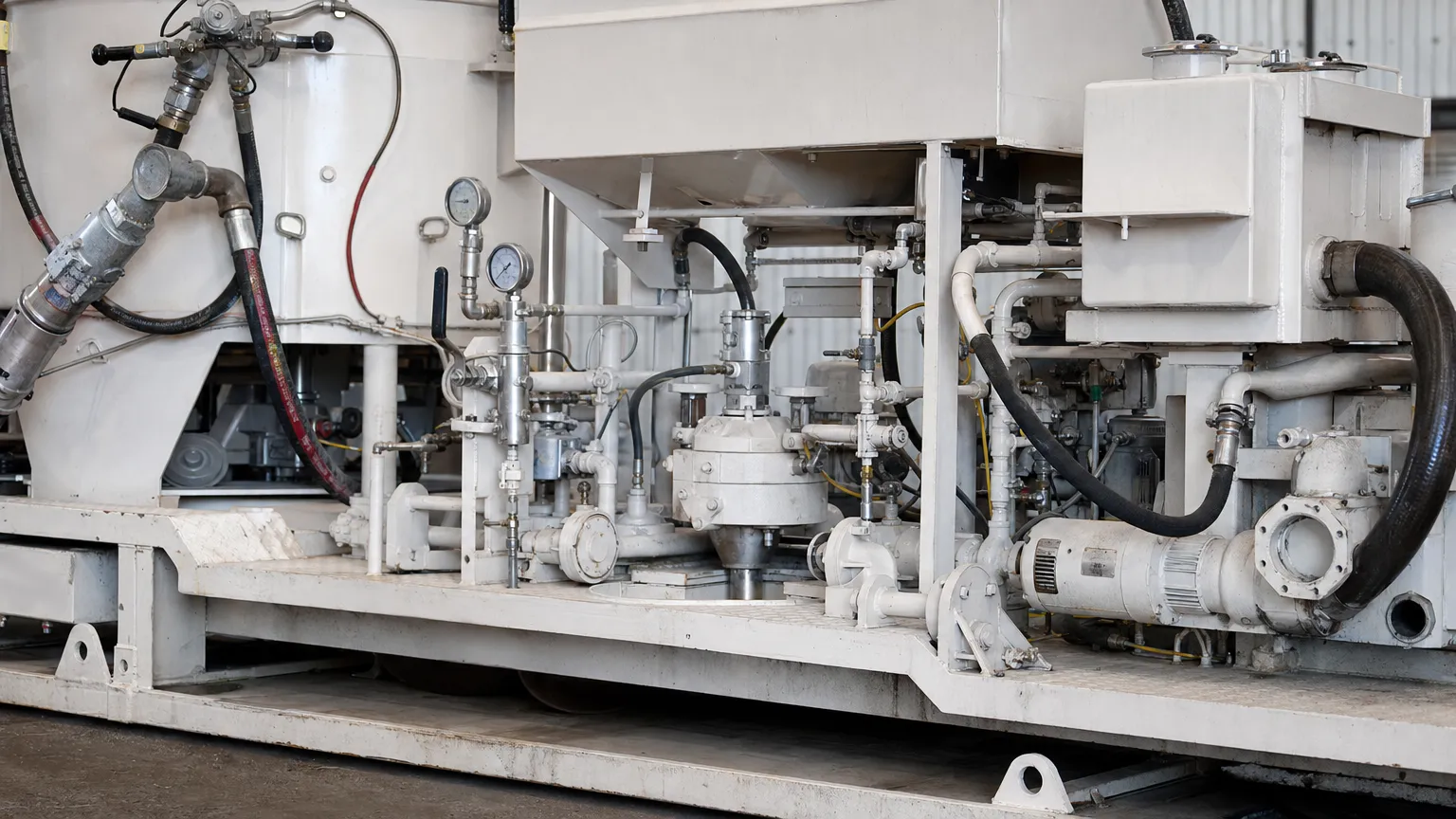
Cement arrives dry, in a bulk trailer or silo, and is moved pneumatically — a dry product blower on the unit, or on the bulk trailer, pushes it through hoses into the mix head. There it meets mix water under pressure and becomes slurry in a mixing tub: a 0.6-cubic-metre continuous mixing tub with a dustless mix head on Unit 320, a dustless mixing system on the Cement Unit 4010. Older units used jet mixers; modern ones recirculate the slurry through the tub so density can be adjusted continuously.
2 · Holding the density
Slurry density decides whether the cement sets as designed and whether the column's pressure stays between pore pressure and fracture pressure in the well. A densometer — Endress on the 4010, Micro Motion on the 320 — measures it in the recirculating loop, and the mixing computer (the Mixmaster on the 4010) trims the cement and water feeds to hold the target. This loop is the difference between a cementing unit and a pump truck.
3 · Feeding the triplex
Slurry is viscous and abrasive, and a triplex cannot draw it from a tub on its own. Centrifugal charge pumps — Mission 5x6 Sandmasters on the 4010, a 4x6 Mission on the 320 — pressurize the suction; recirculating and pressurizing pumps keep the tub moving; a loading pump fills tanks from the water truck.
4 · Placing the cement
The triplex — an SPM 600, a 600 hp 10,000 psi pump, a BJ fluid end to 15,000 psi — takes the slurry to well pressure and pushes it down the casing at the planned rate: 0.08 to 1.5 cubic metres per minute on the 4010, 0.4 to 1.2 on the 320. The 1502 treating iron between pump and wellhead is tested and tagged because it carries that pressure a few feet from the crew.
5 · Measuring the job
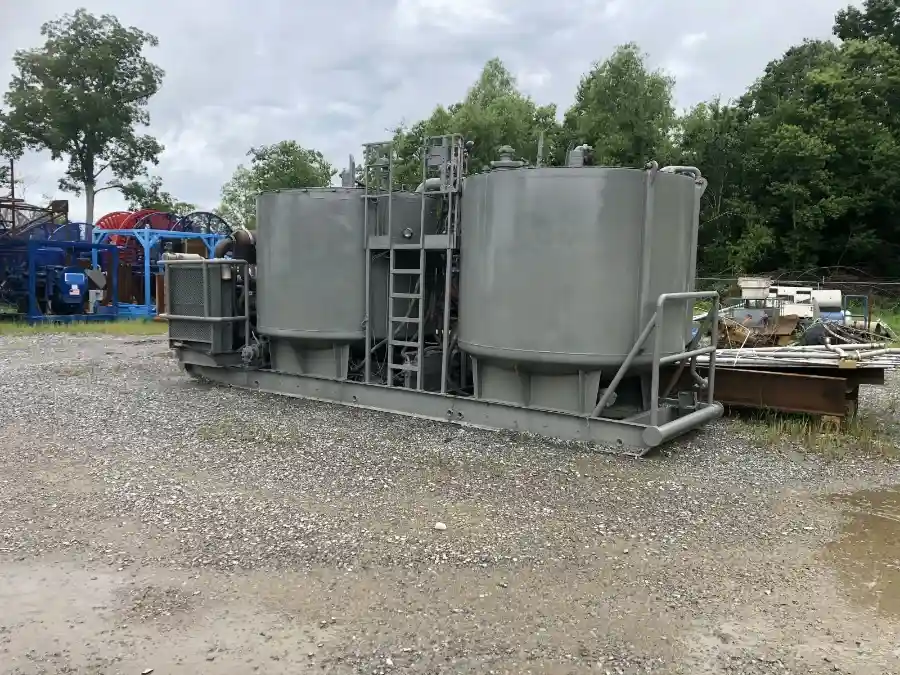
Once the slurry is in, it is displaced to its final position with a measured volume of fluid from the displacement tanks — two 4-cubic-metre tanks on Unit 320 — so the crew knows when the cement has reached the shoe. Batch tanks with augers hold small, precisely mixed batches for plugs and squeezes. Data acquisition records rate, pressure and density against time, the chart that proves the job to the operator and the regulator.
What wears first
The triplex fluid end — valves, seats, plungers and packing — because cement is abrasive. Centrifugal pump impellers and seals, for the same reason. Mix heads and tub liners. Densometer calibration drifts and transducers fail quietly, which is why calibration records matter. The buyer's checklist walks through each system in inspection order.
The same systems, different carriers
Mixing, density control and pumping are the same whether they sit on a truck, a tractor, a trailer or a skid; the carrier decides mobility and capacity, as our notes on cement pump trucks and trailer units and twin cementing skids explain. Units plumbed for acid as well as slurry are covered in cement and acidizing units. All of them are listed under cementing equipment, inspected in our Calgary yard and shipped worldwide.