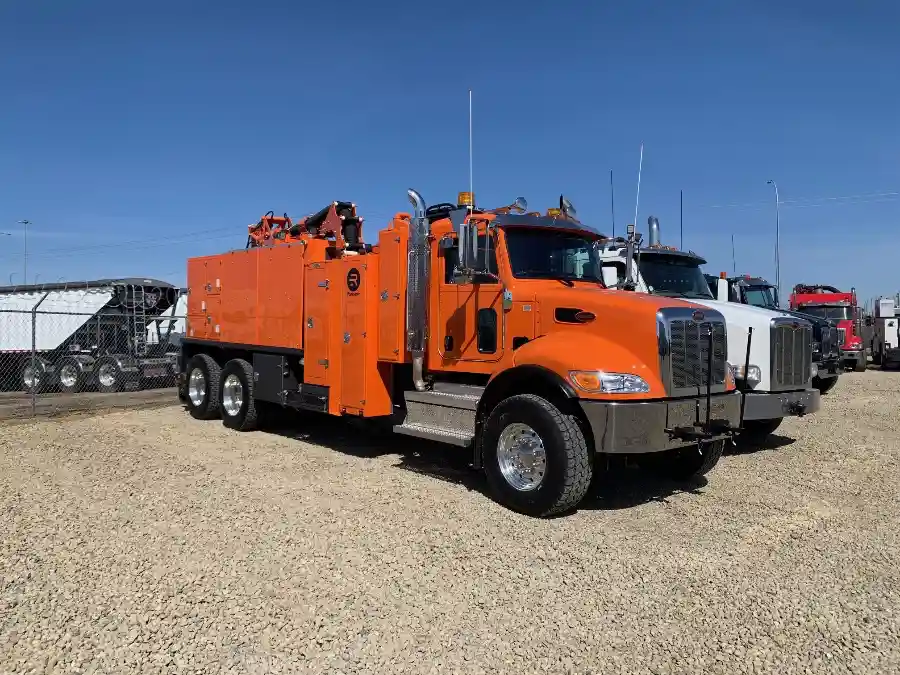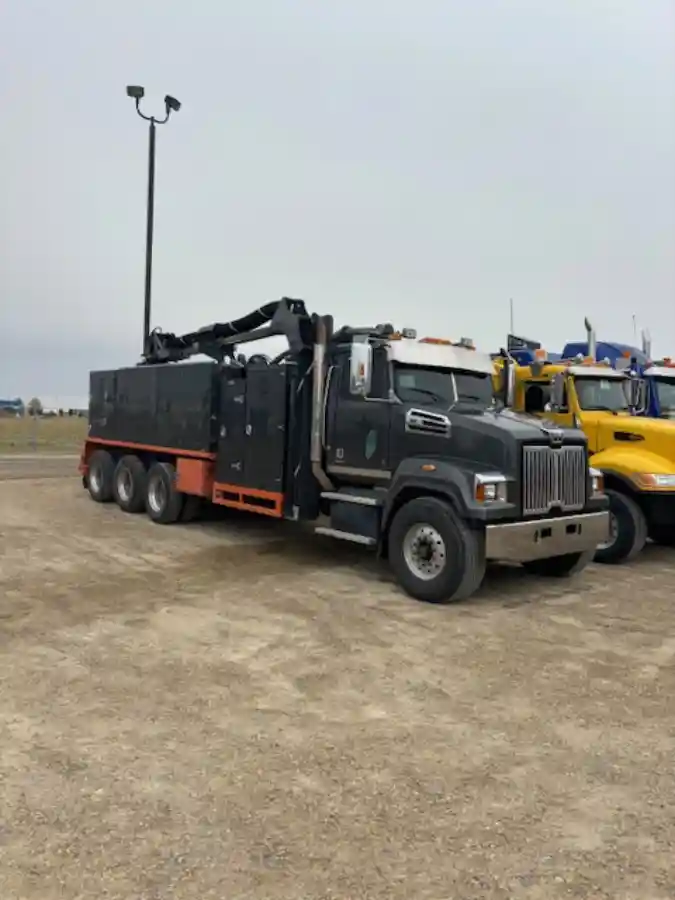
Somewhere under every jobsite there's a line nobody wants to hit. Gas, fibre, power, water — and a backhoe bucket that can't tell the difference. Hydro excavation exists because of that problem, and the hydro excavation truck is the machine that solved it.
How hydro excavation works
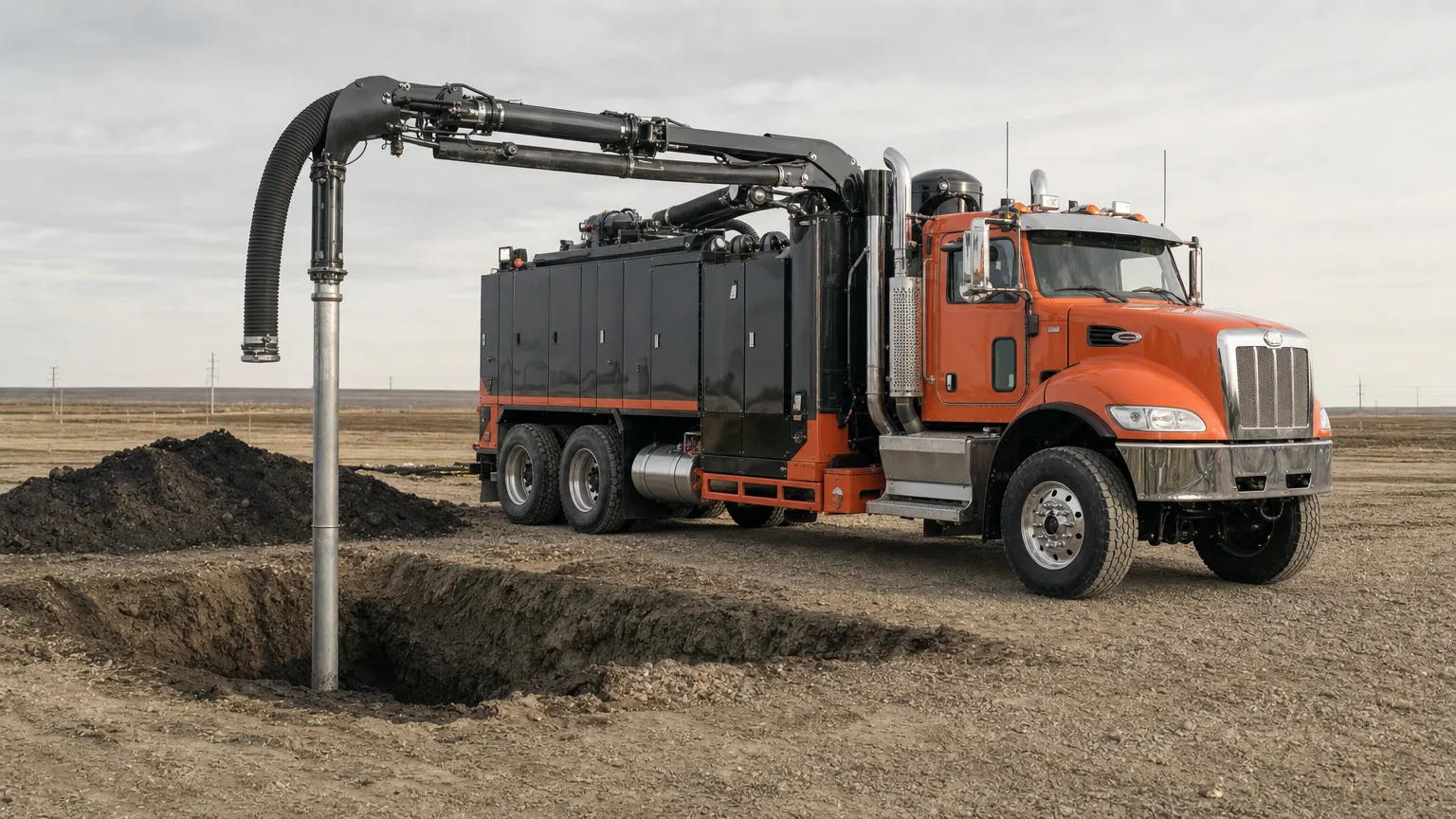
The principle is simple: cut the ground with water, not steel. A pump sends pressurized water — heated by an onboard boiler when the ground is frozen — through a handheld wand that liquefies the soil. At the same time, a high-CFM vacuum blower pulls the resulting slurry up a boom hose and into a debris tank. The ground opens up precisely, and nothing rigid ever touches what's buried below.
The anatomy of the truck
- Water system: tanks, pump and boiler — the cutting side. The boiler is what keeps crews digging through winter.
- Vacuum blower: the muscle that lifts slurry from the hole to the tank. The most expensive component to rebuild.
- Debris body: the tank that holds the spoil, with a rear door for controlled dumping.
- Boom: the articulated arm that positions the vacuum hose over the hole.
One machine, three names
What Canadians call a hydrovac, spec sheets call a hydro excavation truck, and utility bids often call a daylighting truck. Same machine, same job — the name changes with the industry doing the talking. If you're comparing listings across markets, search all three.
What this means if you're buying
Because the method is increasingly mandatory around buried infrastructure, demand for the trucks is structural, not cyclical — which is why good used units hold value. If you're evaluating one, start with our used hydrovac buyer's checklist, then look at what's in our yard: truck-mounted, skid and rough-terrain configurations, inspected in Calgary and shipped worldwide.