A well's surface flow rate is an average. Production logging tells you what is behind it — which zones give oil, which give gas, which give water, and which give nothing. A production logging tool string, or PLT, is a set of sensors run through the producing interval to measure the flow along the wellbore. Here is what it measures, how it is run and what to look for when buying one.
What the string measures
- Flow rate — how fast fluid moves past the tool at each depth. A change in flow marks a zone that is producing or taking fluid.
- Fluid density — distinguishes water, oil and gas, so you know what each zone contributes.
- Temperature — inflowing fluid changes the temperature profile; gas entries cool it noticeably.
- Pressure — for flowing gradients and reservoir pressure across the interval.
- Depth control — a gamma ray and a casing collar locator (CCL) correlate the log with earlier logs and completion components.
Spinner and acoustic flowmeters
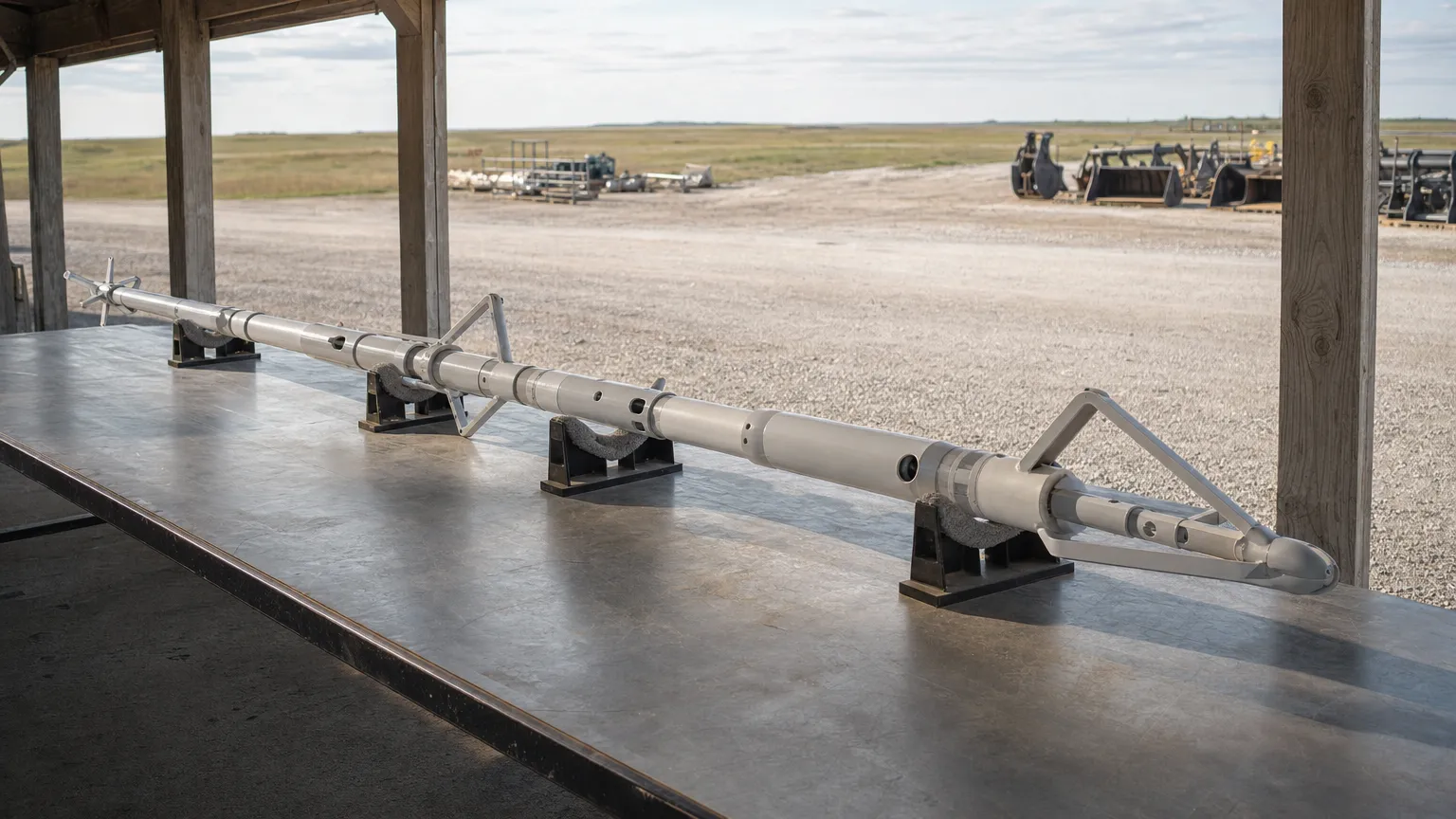
Production logging dates back to the 1930s, and the classic flowmeter is a spinner: an impeller that turns with the flow. It works, but it needs calibration — bearing friction and fluid viscosity make its response nonlinear — and at low flow rates it may barely turn. The EngRD tools in our yard add an acoustic flowmeter that measures flow rate and fluid density in real time, which helps exactly where a spinner struggles: qualitative conclusions about fluid entries in low-rate zones.
The sensors behind the numbers
Resolution comes from the sensors and the telemetry. The EngRD system pairs a precise temperature sensor with a fast-response quartz pressure sensor and sends 100 samples per second to surface. The string is rated to 177°C and 15,000 psi working pressure.
Real-time or memory
Real-time on electric line
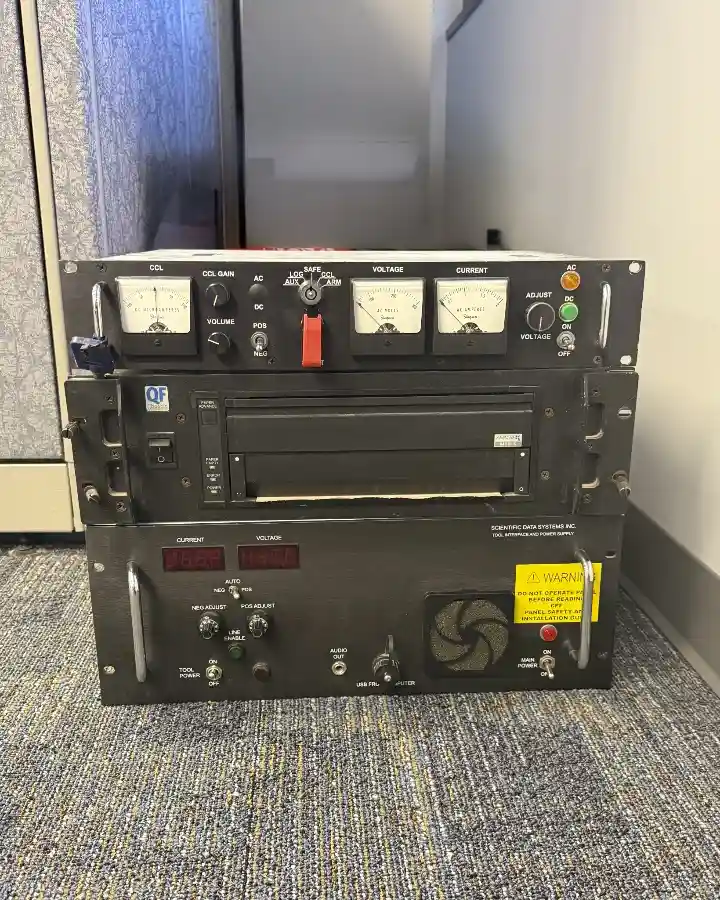
On electric line the tools send data up the cable as they log, so the engineer can watch the profile and repeat a pass on the spot. The surface system in our case is a Warrior 8 — see our Warrior panel guide.
Memory on slickline or coil
On slickline or coiled tubing there is no conductor, so the tools record to memory and the log is downloaded at surface. The EngRD system runs both ways: in dual mode it records everything to memory even while sending real-time data, which gives a backup. To run on slickline or coil it needs a battery housing, a battery pack and a Depth Time System (DTS) that matches the memory data to depth from the surface. Our slickline units and coil tubing units carry it. Memory work lets an operator log a well without bringing in an electric line unit at all, which is often the cheaper option on remote wells.
Buying used PLT tools
- Ratings — temperature and pressure for your wells, with margin.
- Sensors — function test each one; quartz gauges and flowmeters are the expensive parts.
- Compatibility — panel, software and, for memory work, the battery and DTS components.
- Seals and housings — threads, O-ring grooves and bulkheads in good condition.
The well logging tools buyer's guide covers the rest. Our production logging tools are listed under logging tools, function-tested at our yard and shipped worldwide with export documentation handled.