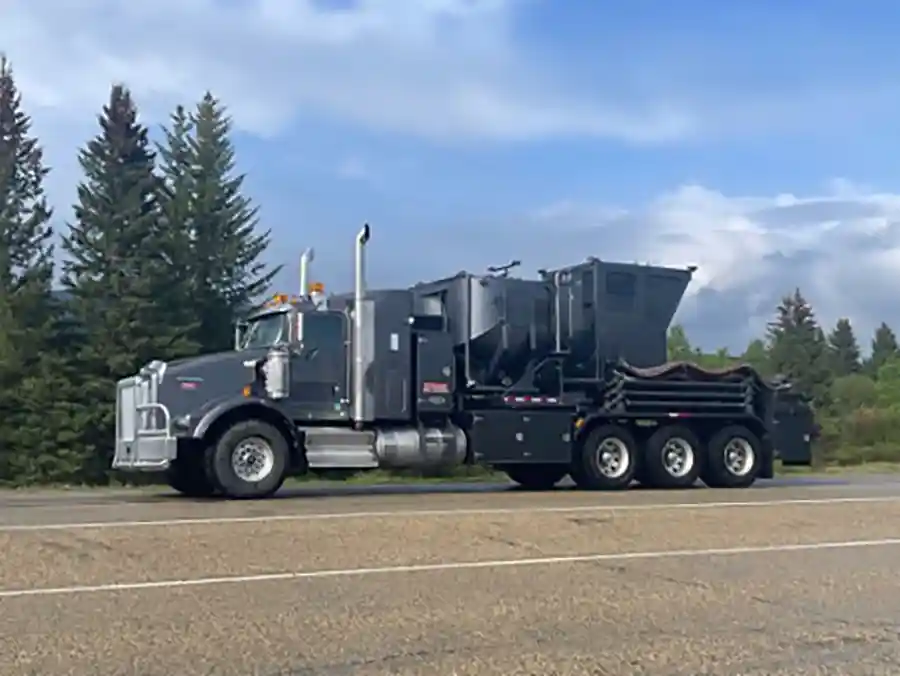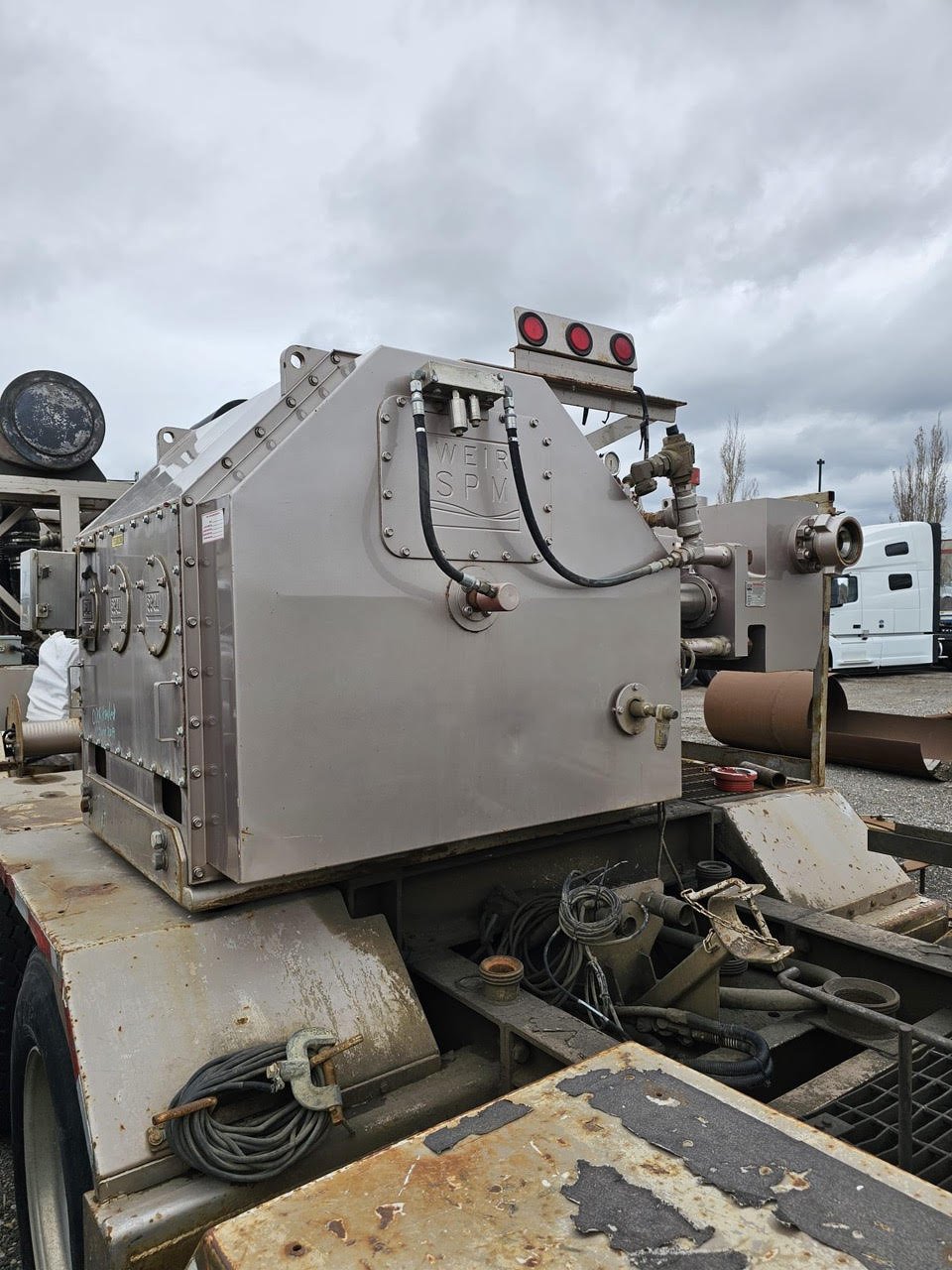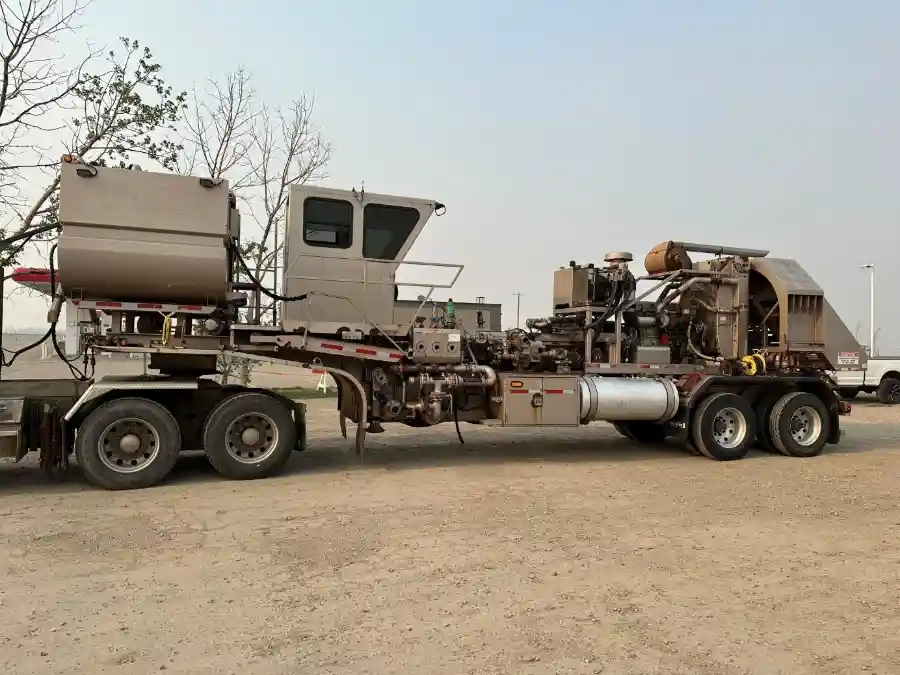
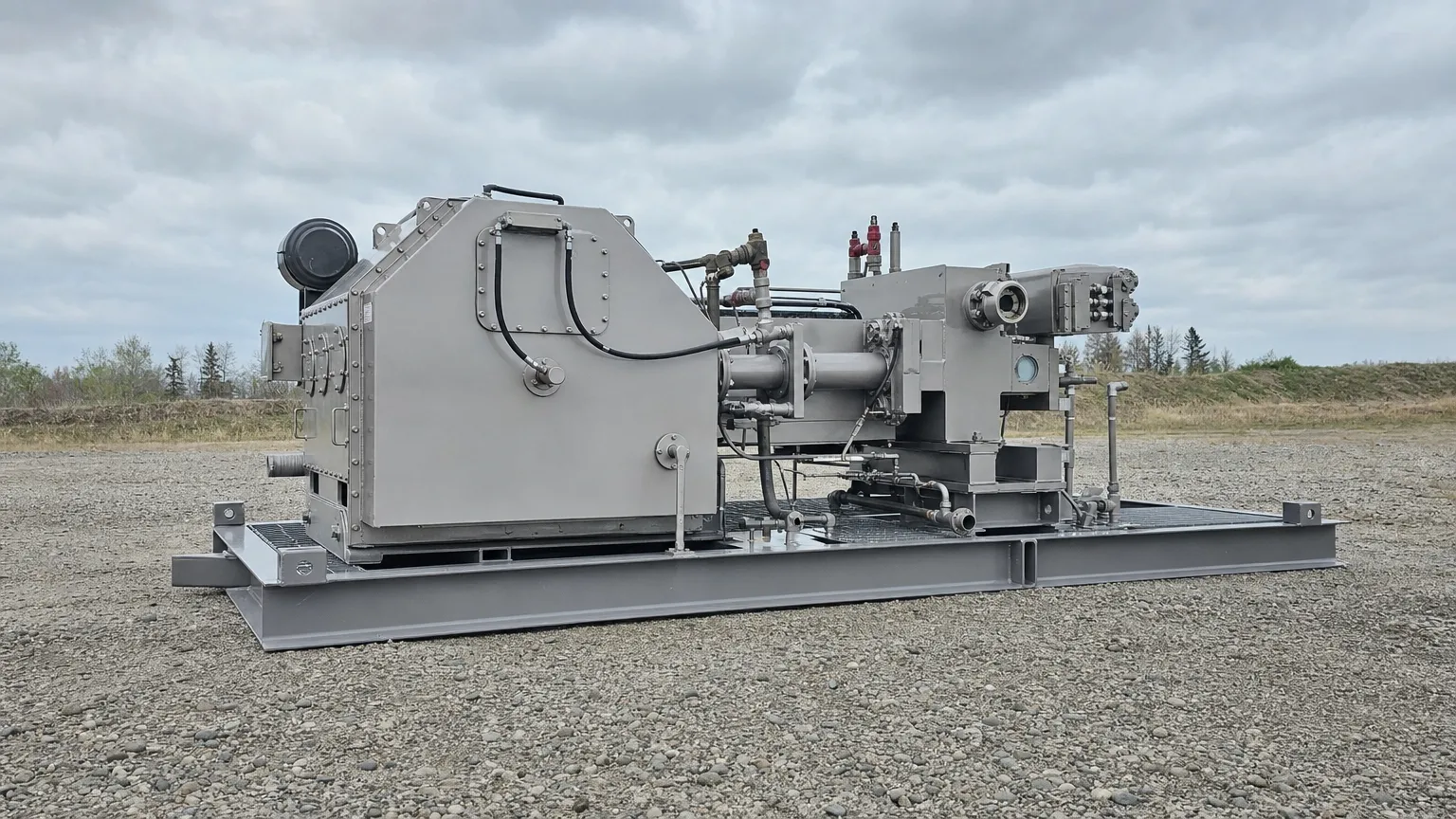
Walk around any well-servicing fleet and you will find the same pump on almost every truck: a triplex. Pressure trucks, fluid pumpers, cementers, hot oilers and frac pumpers all build pressure the same way — three plungers, one crankshaft. Here is how the pump works, what the numbers on its plate mean, and what wears first.
Three plungers, one crankshaft
A triplex is a positive-displacement pump. A crankshaft drives three plungers, their strokes set 120 degrees apart, so one plunger is always pushing while the others draw. Each stroke displaces a fixed volume, whatever the pressure downstream: that is why a triplex can push fluid into a well at thousands of psi, where a centrifugal pump would simply stall. Three plungers instead of one smooth the flow; a pulsation dampener on the discharge smooths it further.
The power end
The power end turns engine rotation into plunger strokes: a gear reduction, the crankshaft, connecting rods and crossheads running in guides. Its rating is the pump's ceiling. The TWS2250 in our yard is a clear example of how those ratings read:
- Maximum brake horsepower — 2,250 bhp (1,641 kW), the most power the pump can absorb.
- Maximum rod load — 225,000 lb (102,060 kg), the most force the power end can put on one plunger.
- Stroke — 8 inches, the distance each plunger travels per revolution.
- Gear ratio — 6.353:1, the reduction between the input shaft and the crankshaft.
The fluid end
The fluid end is where the work happens: a block with three plunger bores, packing that seals each plunger, and a suction and discharge valve on its seat for each bore. Fluid enters through the suction valves as the plungers retract and leaves through the discharge valves as they advance. Everything that touches the fluid wears — plungers score, packing leaks, valves and seats wash out — which is why fluid ends are rebuilt on a schedule and why a buyer asks when it last happened.
Plunger size: pressure or rate
Pressure on a plunger is force divided by area, so the rod load sets a pressure limit for every plunger size. With 225,000 lb of rod load, simple arithmetic gives roughly 17,900 psi on a 4-inch plunger, 14,100 psi on a 4½-inch and 11,500 psi on a 5-inch — before the fluid end's own rating and the manufacturer's tables, which always govern. Larger plungers move more fluid per stroke and give up pressure; smaller ones do the reverse. That is why the same pump can be a high-rate pumper or a high-pressure tester depending on how it is dressed.
Why a centrifugal pump sits in front
A triplex needs its suction flooded. Pumping thick or gassy fluid, or drawing from a low tank, it cavitates and destroys valves. A centrifugal charge pump — the Mission pumps on our Unit 403 and Unit 324 — feeds it under pressure. Centrifugals make volume; triplexes make pressure. Most packages need both.
Reading a pump package
On a complete unit you will see the triplex quoted by horsepower, pressure and rate: a 600 hp triplex rated to 70 MPa with a 50 to 1,250 L/min range on both our units, plus a 100 hp, 5 to 50 L/min auxiliary triplex on 10K Pressure Unit 324 for precise low-rate testing. The fluid pumper buyer's guide turns this into an inspection list, and every pump in our fluid pumpers category is inspected at our Calgary yard and shipped worldwide.