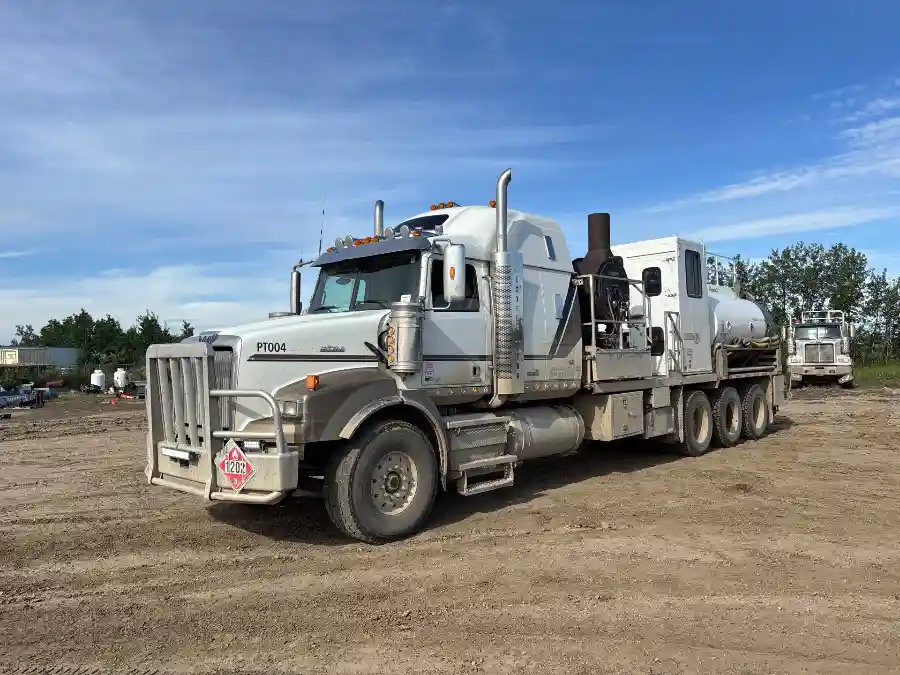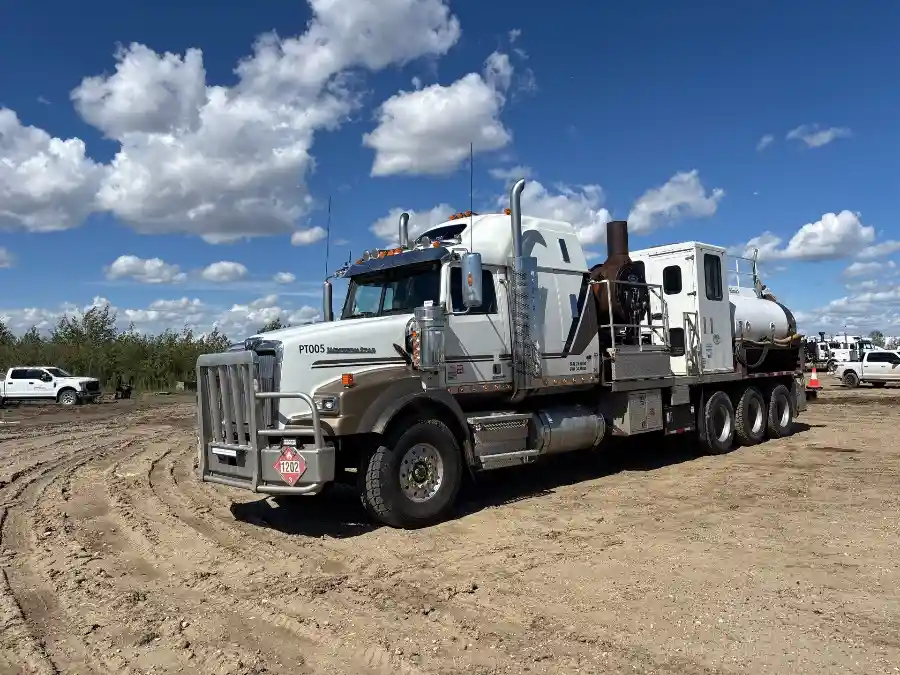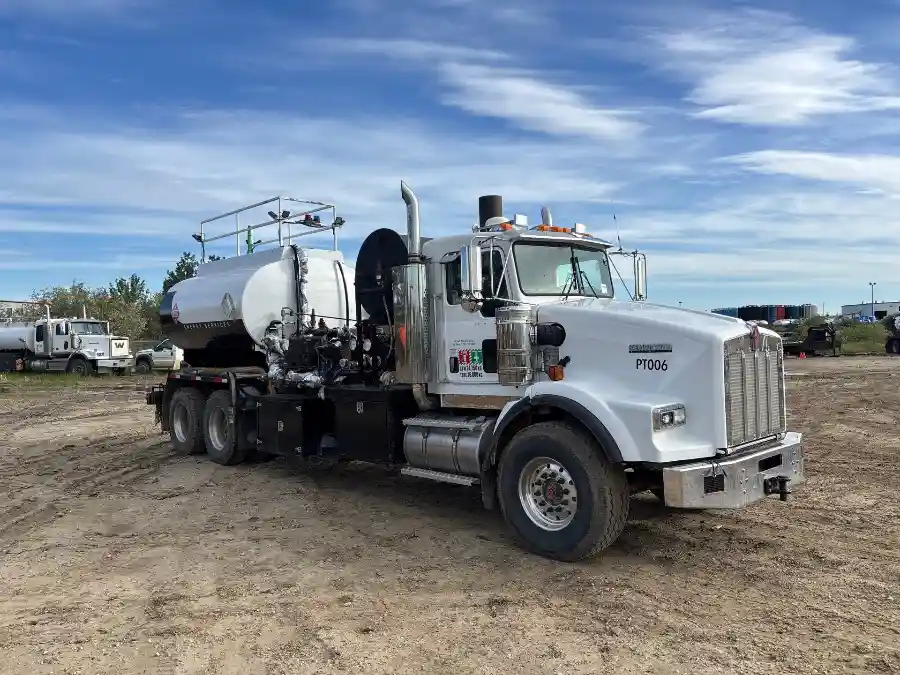
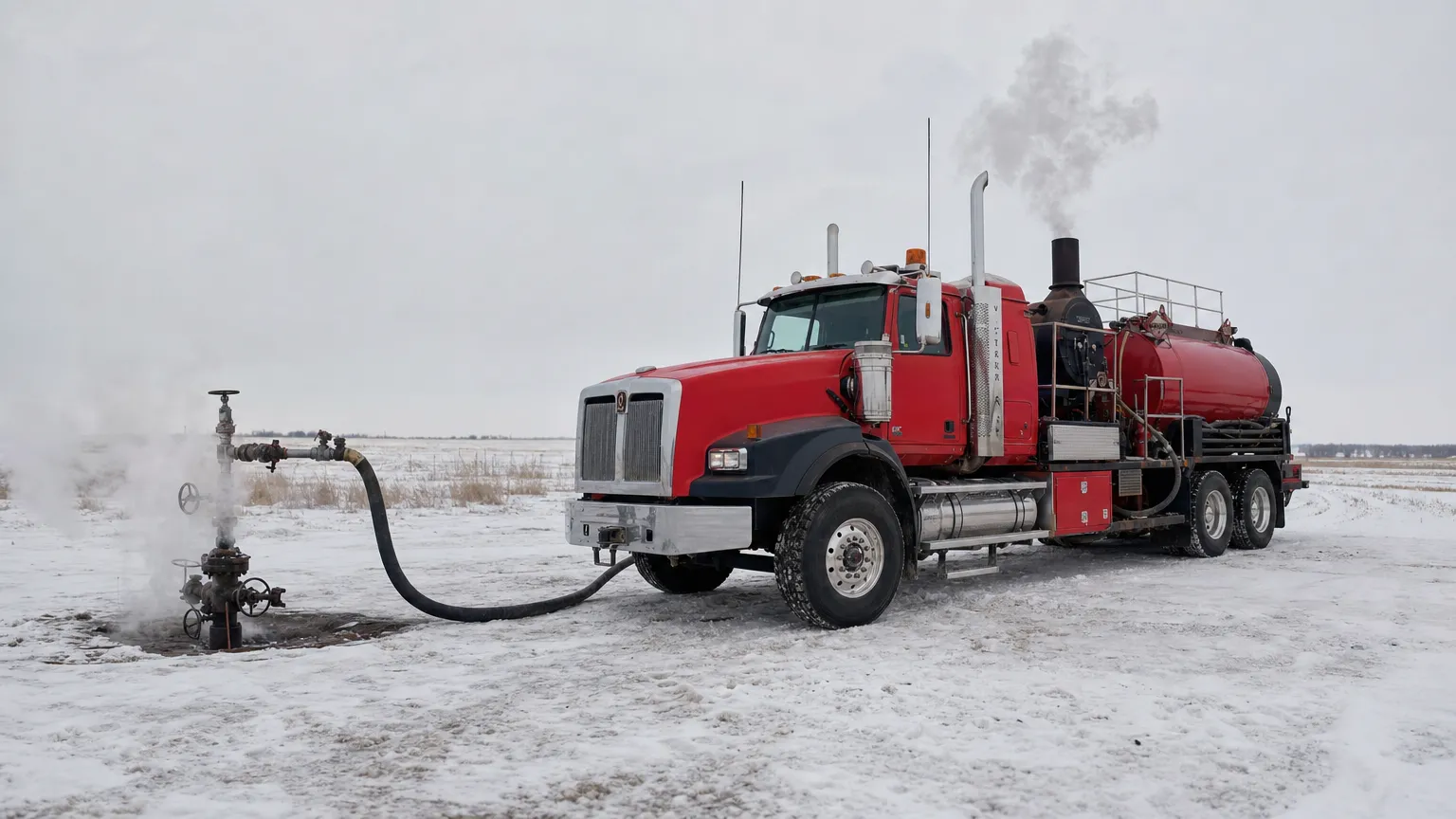
"What is a hot oiler" is one of the most-asked questions in our whole catalogue, and the machine is simpler than its name suggests. A hot oiler is a truck that heats fluid and pumps it. A burner fires a coil, the fluid passes through the coil and comes out hot, a pump sends it down a well, through a line or into a tank. Where heat solves a problem in the oilfield — and it solves a lot of them — a hot oiler is the tool.
How it works
Fluid — usually produced oil, water or a treatment fluid — is drawn from the unit's compartmented tank or from the lease, pushed by a pump through a serpentine heating coil inside a firebox, where a diesel or propane burner heats it, and delivered at temperature through hoses to the job. Heat output is rated in millions of BTU per hour (here's how the rating works); the pump and tanks decide the rate and the fluids.
The jobs
- Hot oil treatments — pumping hot oil down the tubing to melt paraffin that chokes production.
- Flowline and pipeline heating — clearing wax and restoring flow in surface lines.
- Tank and vessel heating — keeping production tanks and treaters at temperature.
- Freeze protection and thawing — lines, valves and equipment in deep cold.
- Well completions and workovers — circulating heated fluid where cold would stall the program.
- Frac fluid heating — bringing frac water to temperature, the duty that overlaps with dedicated frac heaters.
Hot oiler, pressure truck or fluid pumper?
All three pump fluid; only the hot oiler heats it. If the job is pressure testing or cold fluid placement, you want a pressure truck or fluid pumper; if heat is the point, it's a hot oiler.
Buying one
Hot oilers are the units Canada Oilfield Equipment is known for: diesel and propane units from 5 MBTU up, inspected coil-to-chassis at our Calgary yard and shipped worldwide. Start with the buyer's checklist, then see the hot oilers available now.