
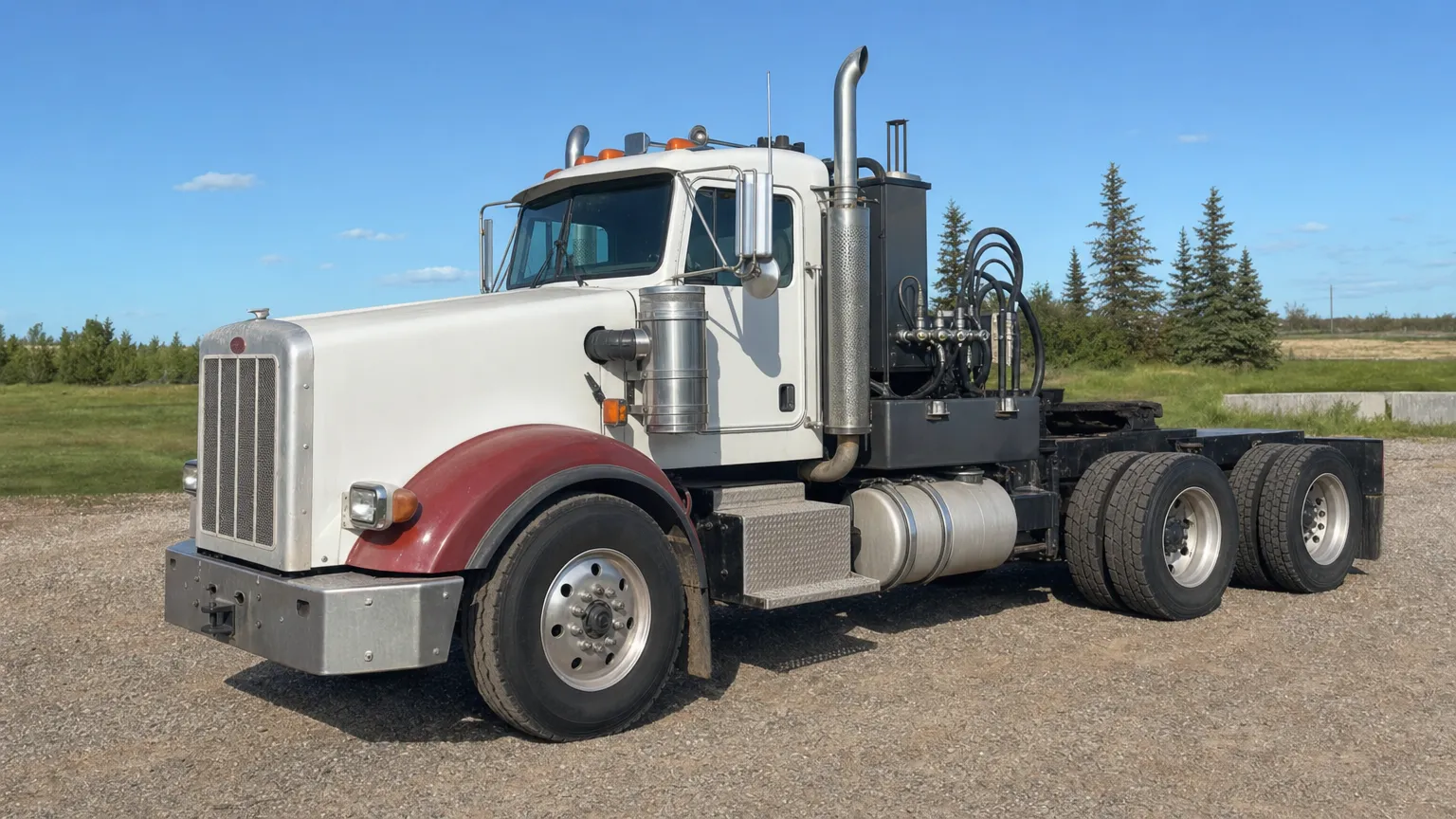
A tractor without a wet kit can pull a trailer. A tractor with one can make the trailer work. The wet kit is the hydraulic system that lets a truck's engine power equipment on the trailer behind it — and in the oilfield, a great deal of equipment rides on trailers. That is why buyers search for the kit by name. Here is what it is, what it powers and what to check.
What is in a wet kit
- Power take-off (PTO) — a gearbox bolted to the transmission that takes power from the engine while the truck is parked or moving.
- Hydraulic pump — driven by the PTO, it turns engine power into hydraulic flow and pressure.
- Reservoir — the oil tank, usually mounted behind the cab or on the frame, with filters and a cooler on heavier systems.
- Valves and controls — to engage the PTO, set pressure and direct flow.
- Hoses and quick-connects — to couple the tractor's hydraulics to the trailer.
"Wet" refers to the hydraulic oil; a tractor without the system is sometimes called dry.
What it powers
Hauling trailers
Tilt decks, lowboy ramps and detachable goosenecks, walking-floor trailers and end dumps. Any trailer with hydraulic functions and no engine of its own needs a wet kit on the tractor in front of it.
Oilfield service trailers
This is where wet kits become heavy-duty. Coil tubing reel trailers, power and control trailers and some nitrogen and pumping trailers draw hydraulic power from the tractor. In our yard, the trailer-mounted coil units built by Hydra Rig ride behind Kenworth T800 tractors fitted with Hydra Rig wet kits, and the Stewart & Stevenson coil rigs behind Kenworth tractors with S&S 6,000 psi PTO-driven wet kits. Our note on coil tubing trailers explains why the industry splits the spread that way.
The wet kit tractor in our yard
Our listed wet kit tractor is a 2012 Peterbilt 367 with a Hydra Rig (NOV) wet kit, a Cummins ISX15, an 18-speed transmission and air suspension, showing 85,506 on the odometer. A Hydra Rig kit on a Peterbilt 367 is a configuration built to pull coil and service trailers, not only freight.
What to check on a used wet kit
- PTO — engagement, noise, mounting bolts and seals; confirm it is rated for the continuous duty you need.
- Pump — flow and pressure under load, measured against what your trailer needs; a worn pump runs hot and slow.
- Reservoir and filters — oil condition, filter change records, contamination.
- Cooler — essential for long operating hours on service trailers.
- Hoses and couplers — age, chafing, leaks and coupler compatibility with your trailers.
- Controls — in-cab switches, pressure settings and safety interlocks.
Matching tractor and trailer
Pressure and flow are the match that matters: a trailer designed for a high-pressure kit will not work properly on a light one. Tell us the trailer — make, model and hydraulic requirements — and we confirm the tractor's kit fits before you buy. Read the oilfield tractor buyer's guide for the rest of the truck, and see our tri-drive chassis note for axle choices.
Wet kit tractors are listed under chassis and tractors, inspected at our Calgary yard with reports and photos, and shipped to any destination with export documentation handled.