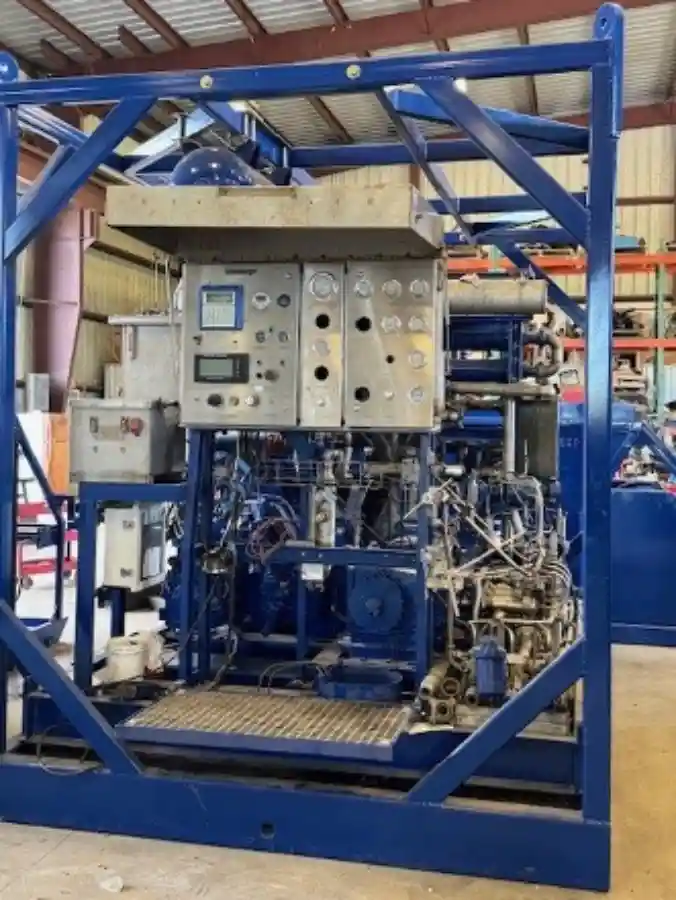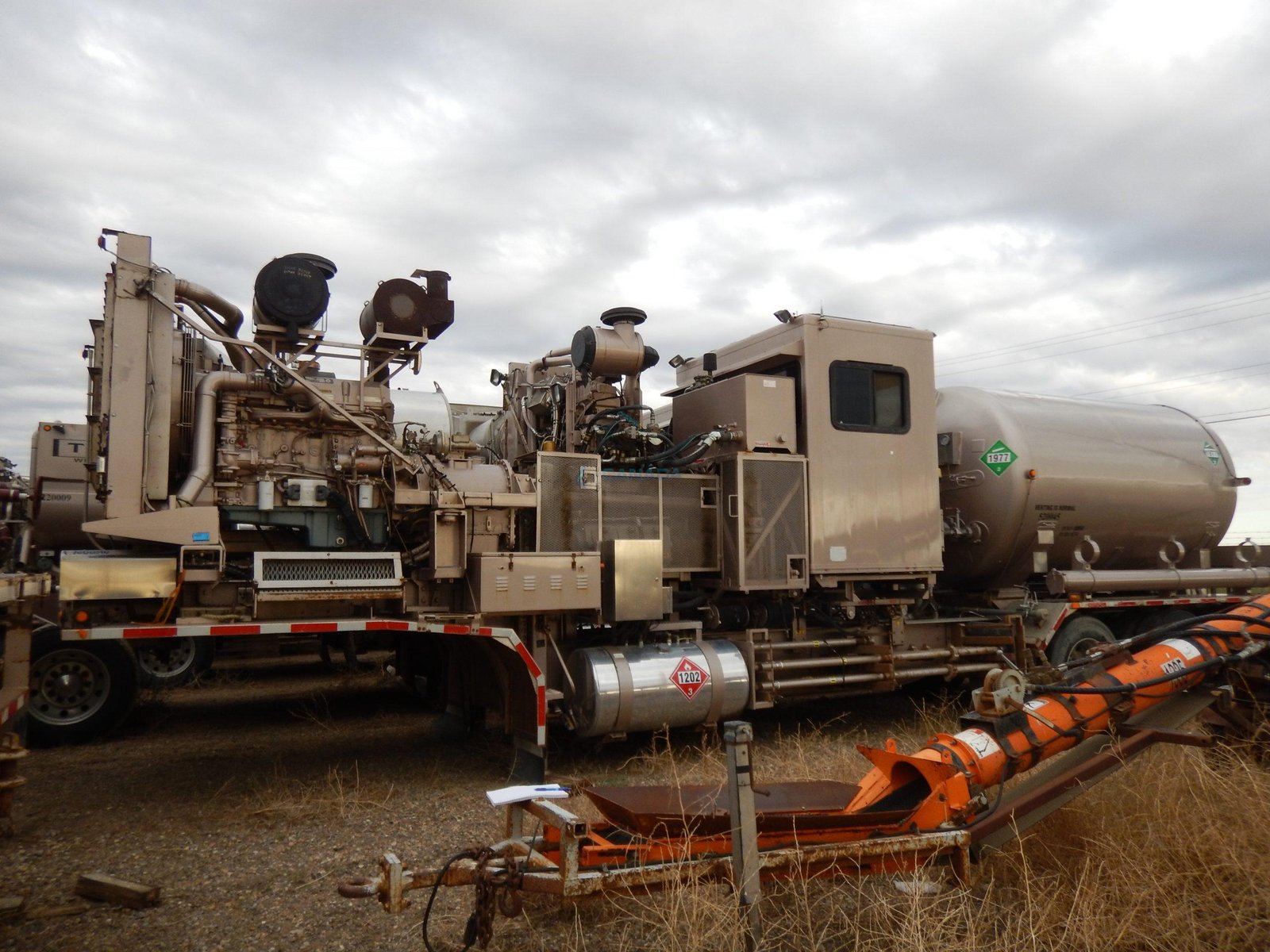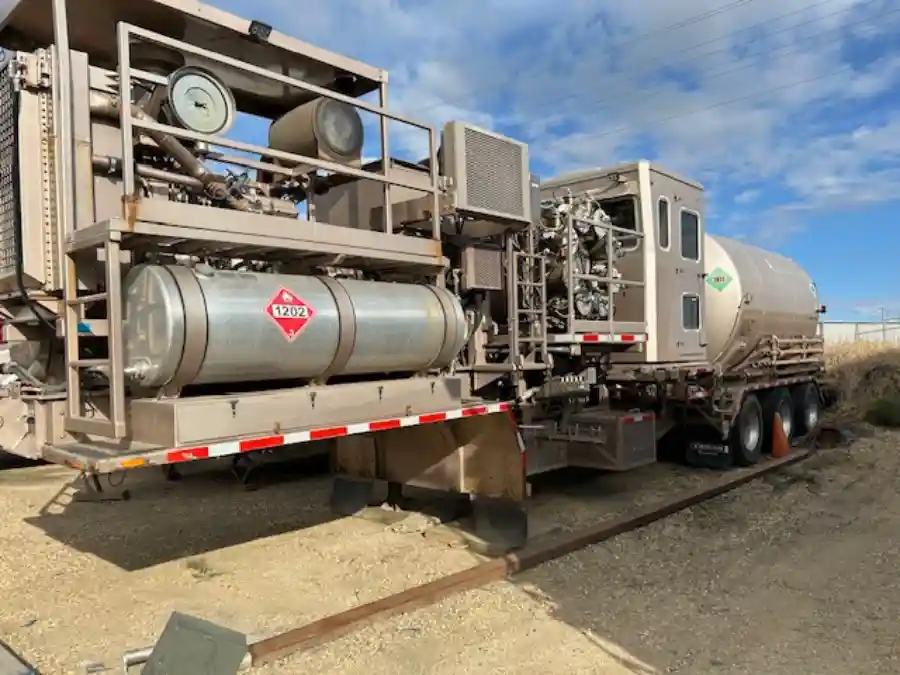
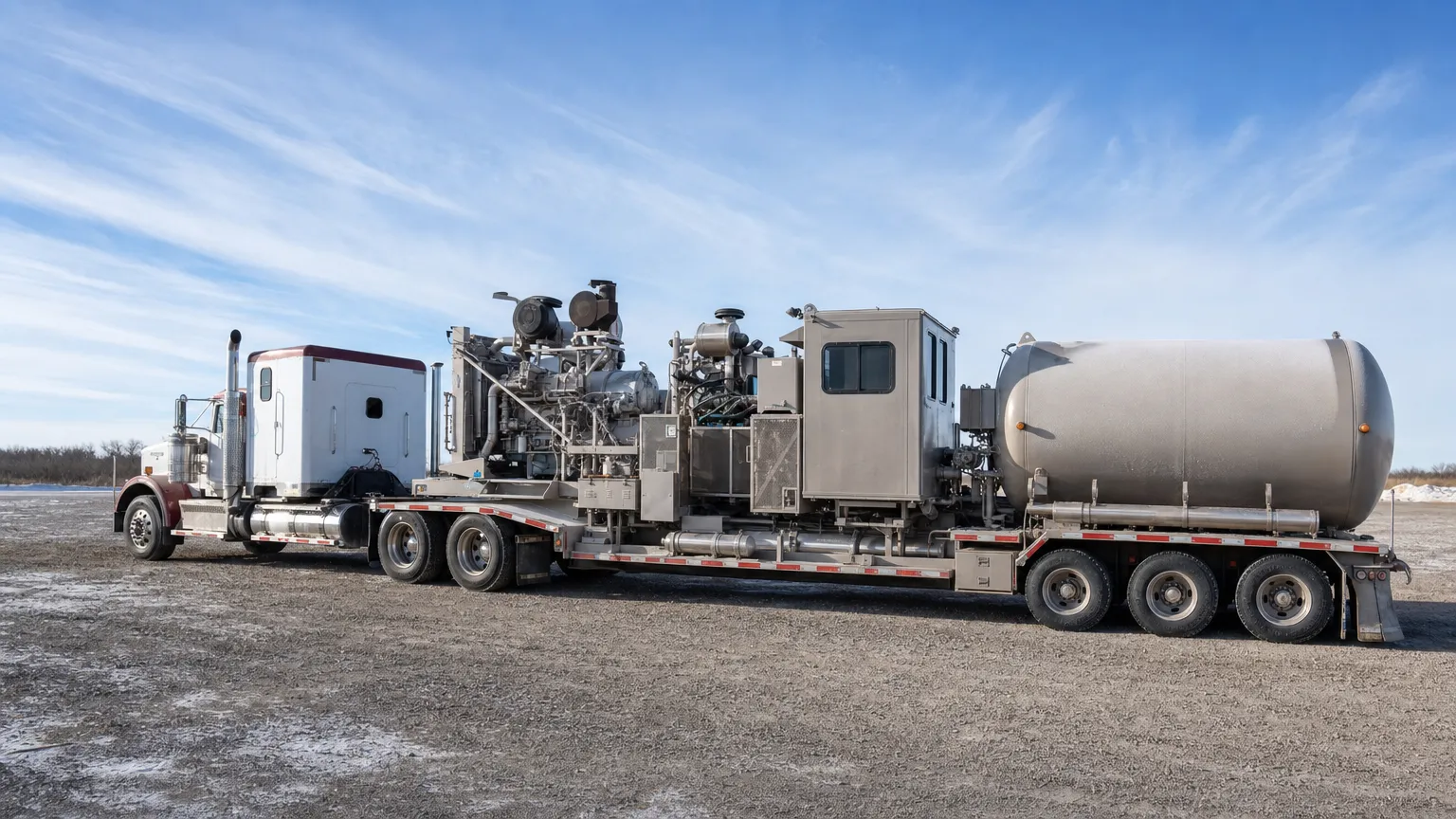
A nitrogen pumper doesn't pump gas. It pumps a liquid colder than anything else on the lease and turns it into gas on the way out. That one fact explains the whole machine: why the tank is a vacuum flask, why the pump is built differently from any other triplex, and why the vaporizer and its controls are the parts that decide safety. Here's the system, end to end.
1 · The liquid nitrogen tank
Liquid nitrogen sits at roughly minus 196 °C, stored in a double-walled, vacuum-insulated tank — a giant thermos. Vacuum integrity decides how long the liquid lasts before it boils off; relief valves protect the tank as it inevitably warms. Capacity decides how big a job the unit can do between refills.
2 · The cryogenic pump
A triplex positive-displacement pump built for cryogenic service: special materials, seals and clearances that tolerate the cold, usually fed by a boost pump to prevent cavitation. It raises the liquid to working pressure — which is where the unit's pressure capability comes from — before any heat is added.
3 · The vaporizer
The high-pressure liquid passes through a vaporizer — a direct-fired coil or a heat exchanger warmed by the engine or a burner — and flashes to gas, expanding hundreds of times in volume. The vaporizer's capacity sets the unit's rate (180K, 660K); its outlet temperature control keeps cold gas from damaging downstream equipment.
4 · Controls and relief
Pressure and temperature instrumentation, over-pressure relief, emergency shutdowns and the operator station tie the system together. On a used unit, these are the components whose documented function tests matter most.
What wears first
Cold-end seals and packing on the pump, vaporizer coils and burner components, relief valves (which have certification intervals) and tank vacuum over the years. Our buyer's checklist walks through each; the applications guide connects the system to the jobs. The nitrogen pumpers in our yard are inspected system by system in Calgary and shipped worldwide.